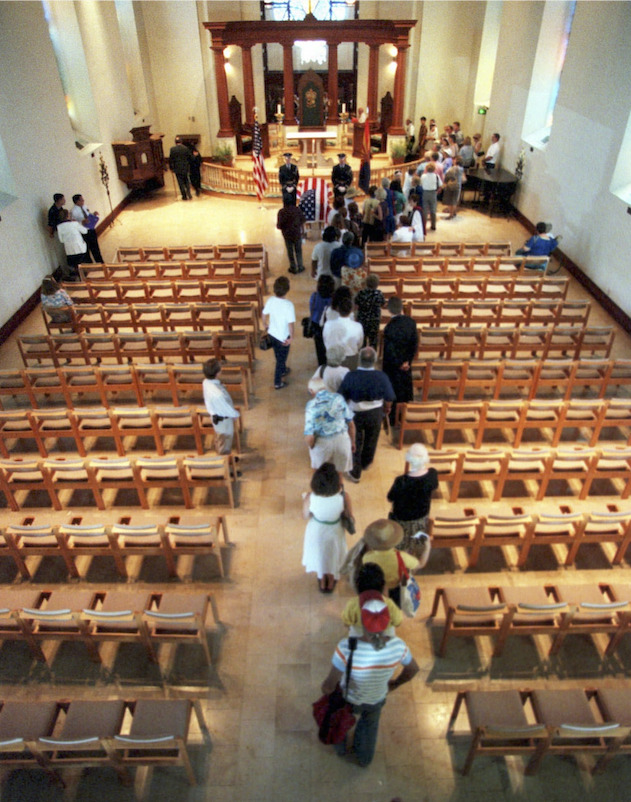
Located in Roosevelt Row, Trinity Cathedral has been an important community location since its completion in 1920. Despite pressure to relocate due to the freeway expansion, Trinity Cathedral remains in its original location and occupies a special place in the local art scene.
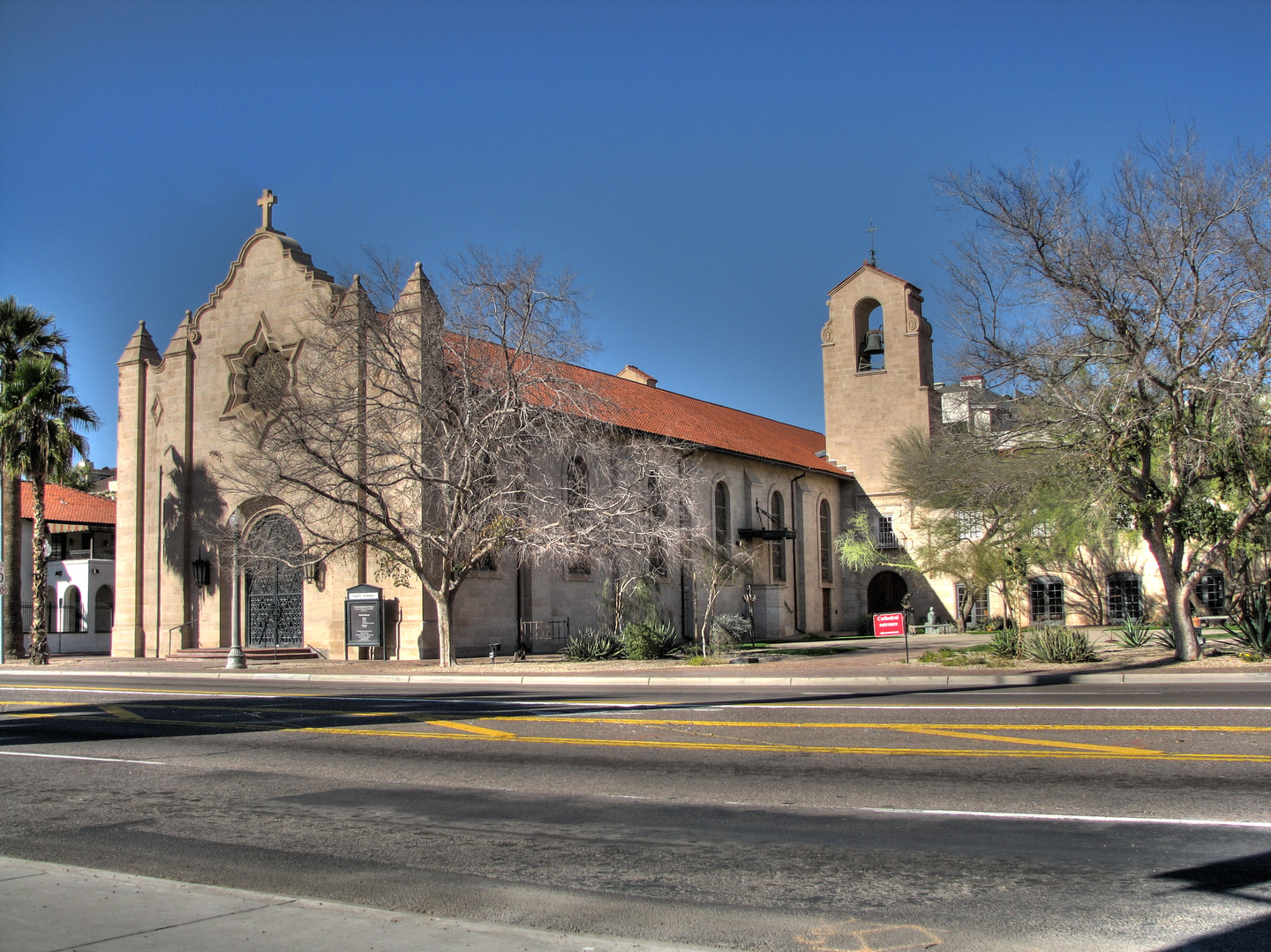
Roosevelt Row, in the heart of Downtown Phoenix, contains an eclectic mix of high-rises, cottages, and revival style buildings, making it a unique representation of various architectural styles found in Phoenix. At the corner of Roosevelt Street and 1st Avenue lies Trinity Cathedral, standing for over 100 years and growing with the city itself. Inspired by Spanish colonial architecture, the Cathedral continues to anchor the eclectic neighborhood with its striking architecture and stained glass windows.
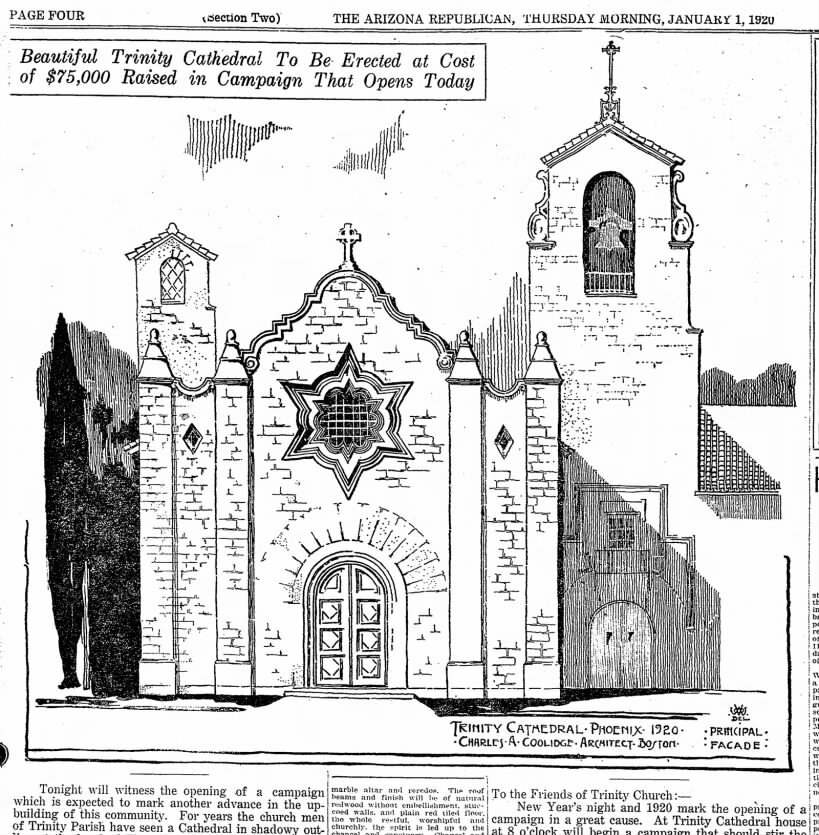
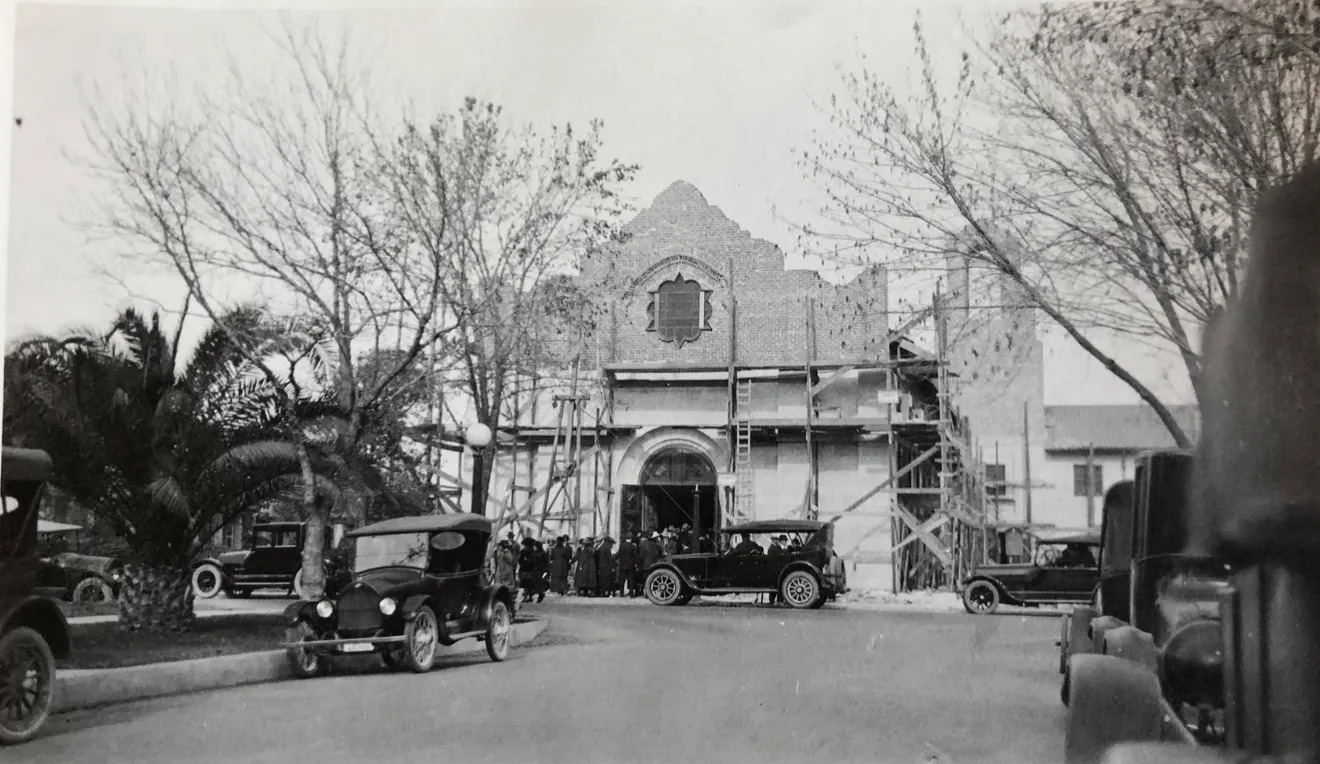
Trinity Cathedral has a deep-rooted history, tracing its origins back to 1885 when the Episcopal Church arrived in Phoenix, Arizona. The first church building, a small brick structure with a bell tower, was established in 1889. As the congregation grew, the construction of the magnificent Trinity Cathedral, which we see today, commenced in 1915 and was completed in 1920. Architect Charles Coolidge of Boston was inspired by Spanish colonial architecture and included blocks of tufa stone, clay roof tiles, redwood roof beams, and plain red tiled floor.
The Cathedral served the city and its congregants as Phoenix grew. The parish served the community by launching St. Luke's Hospital, Friendly House, Golden Gate Settlement House, and other programs to benefit the city. B.P. Darrel Dupa, Dwight B. Heard and Barry Goldwater were all prominent members of the congregation. By 1948, an estimated 2000 parishioners called Trinity Cathedral their spiritual home.
In the 1960s, the prospect of freeway expansions into the downtown Phoenix area caused concerns for many buildings in the vicinity, as they faced the possibility of demolition. Trinity Cathedral was not exempt from these worries and discussions arose about relocating it to a suburban area, as many other churches had done. Furthermore, due to its lack of renovations since its original construction, the cathedral was showing signs of physical wear and tear. However, ultimately, the decision was made to preserve the cathedral in its current location and update it to adapt to the changing times. During the period between 1960 and 1990, numerous buildings in the area were indeed demolished, but thanks to the efforts of local officials, the remaining historic districts, including Trinity Cathedral, were allowed to stay put. The cathedral also owned parcels of land in the surrounding area, further securing its place.
By 1990 the number of parishioners attending church in the cathedral dropped to less than 100, due to changing make up of the surrounding neighborhoods. However, throughout the decade the gentrification of the downtown area and the popularity of historic homes led to a resurgence in membership. In early 2000, the leadership of the Cathedral began a campaign to restore the church and to grow its congregation. Labeling this fundraising campaign a "resurrection" of the Cathedral, restoration work revealed the original redwood ceilings and was completed a year later. However, a fire destroyed parts of the sanctuary in 2002, and it took three years for the congregation to return to the building. Today Trinity Cathedral continues to offer weekly services to parishioners, as well as serving other needs.
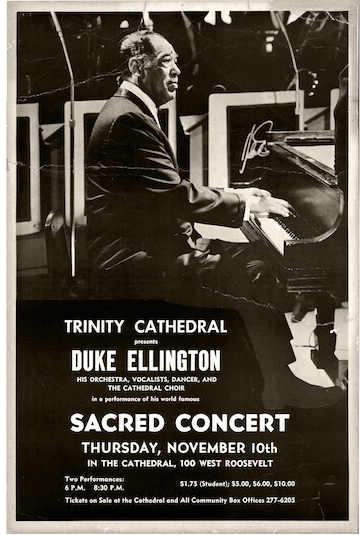
Beyond being a place of religious significance, Trinity Cathedral also played a role in promoting the arts. In 1966, the cathedral hosted two sold-out performances of Duke Ellington's Concert of Sacred Music, establishing itself as a venue for cultural events. During its renovations, Trinity Cathedral received new iron doors and stained glass windows, incorporating elements reminiscent of Spanish colonial churches. In the present day, the cathedral continues to embrace the arts by housing the Olney Gallery, providing a platform for local artists to exhibit their work and allowing the church to engage with the public in new and creative ways. Throughout its existence, Trinity Cathedral has remained an invaluable piece of history, serving as a testament to Phoenix's growth and transformation over the years.
Images